
When planning a solar installation, people look at the roof area, the sun orientation and the electricity production potential. Below the surface, however, are beams, columns and structural connections whose condition and ability to carry additional loads are not always visible to the eye.
This is where the structural engineer comes in, whose role is to examine how well the structure suits the planned system, with reference to loads, wind forces and anchoring solutions.
Structural engineer approval for a solar system is far more than a formality. It is based on a professional engineering assessment, the identification of possible limitations and the definition of the checks required to ensure the design meets the relevant engineering and safety requirements.
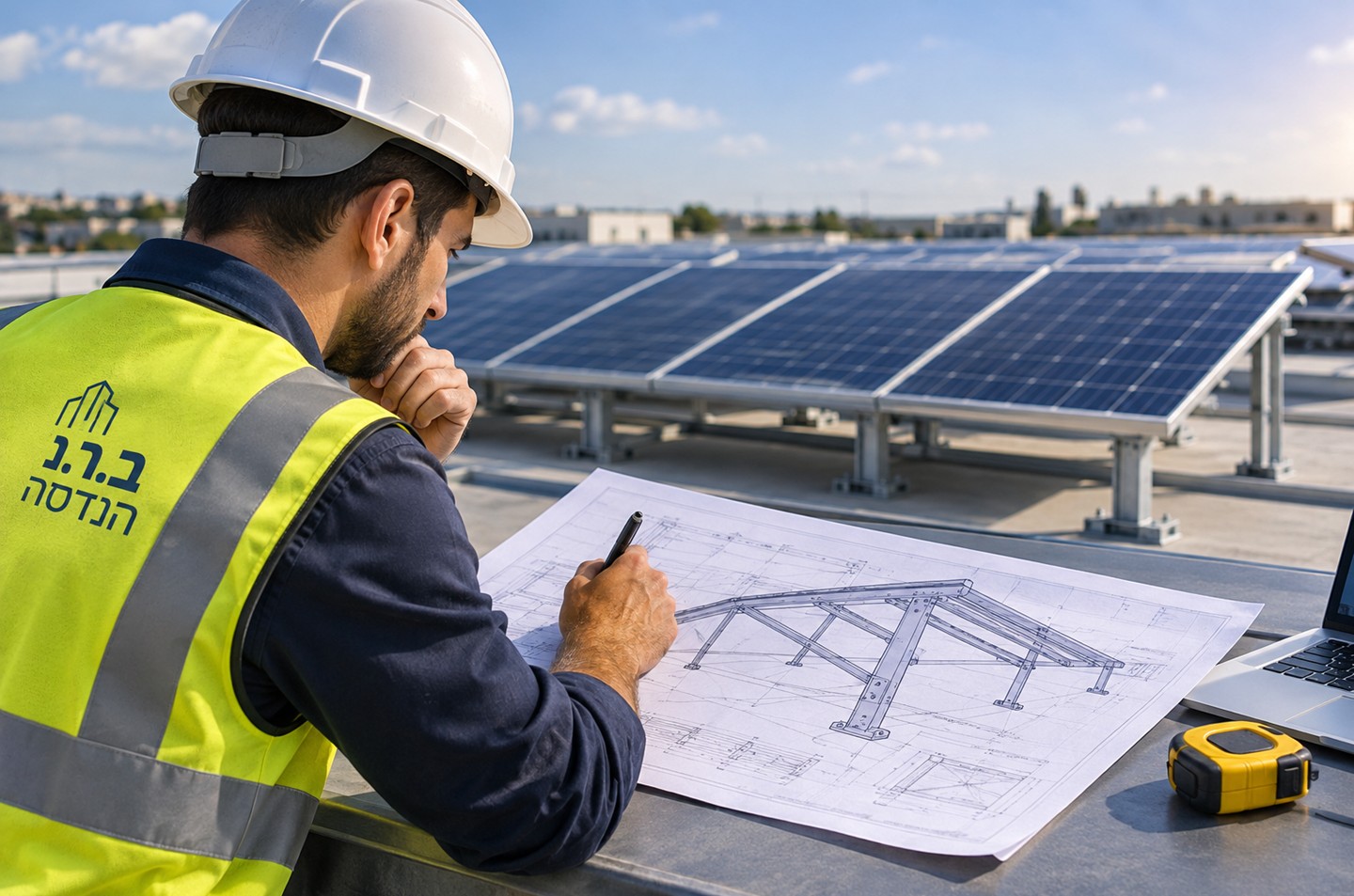
Roofs of existing buildings may look perfectly sound even when they have engineering characteristics that call for a closer examination.
For example, a concrete roof built decades ago may have carried air-conditioning systems, solar water heaters and other equipment for years. When planning to add a solar system to it, it is important to examine the existing loads and the effect of the new loads on the building’s components.
In industrial buildings, where metal roofs and steel structures are common, it is also necessary to check that the purlins, beams, connections and frame components suit the planned system.
The fact that a roof performs well in its current use does not necessarily prove that it is suitable for carrying additional loads.
A professional structural engineer knows how to examine the existing information about the building, identify missing data and define which checks are required in order to reach a sound engineering conclusion. Therefore, before installing the system, it is important to carry out a suitable engineering assessment that addresses the loads, the condition of the structure and the anchoring solutions.
Learn more about when you really need a structural engineer.
One of the common mistakes in planning a solar system is focusing on the weight of the panels alone.
In practice, structures for solar systems have to cope with a combination of loads and forces, some of which change according to the environmental conditions and the characteristics of the installation.
Wind, for example, can apply uplift and horizontal forces to the panels, and these forces are transferred through the mounting rails and anchor points to the building’s components. Therefore, even when the weight of the system is not particularly high relative to the roof’s load-bearing capacity, the suitability of the connections and the effect of the wind forces on the system and the frame still need to be checked.
In addition, the position of the panels on the roof, the installation angle and the distances from the roof edges may all affect the forces acting on them.
An experienced structural engineer examines not only how much the system weighs, but also how the forces travel from the panels into the structure, and whether the frame components and connections are suited to this.
Many buildings undergo changes over the years. Air-conditioning systems are installed, equipment is added to the roof, openings are altered and sometimes building additions or other modifications are carried out. Not every such change necessarily appears in the building’s original plans.
When planning a solar system on an existing roof, it is important to check whether the actual situation matches the available engineering documentation, and whether changes have been made that might affect the building’s load-bearing capacity.
For example, adding heavy equipment in a particular area of the roof may affect the distribution of loads. In other cases, changes to the frame components or connections may require further examination.
A professional structural engineer does not automatically rely on old plans, but examines how well they match the existing situation and defines additional information or checks when needed.
Solar panels are not placed on the roof freely; they are connected to a support system that includes rails, connectors and anchoring components.
The way the system is connected to the roof is an essential part of the engineering design.
When designing a structure for solar systems, it is necessary to examine not only the strength of the rails and connectors, but also how well the anchor points suit the building components they connect to.
Anchoring to a concrete roof is different from anchoring to a steel structure, and even within the same type of building there may be significant differences depending on the condition of the components and the details of the connection.
A design that does not take the load transfer path into account may create local loads or overload components that were not designed for this. Choosing a suitable anchoring solution therefore requires an understanding of both the solar system and the existing structure together.
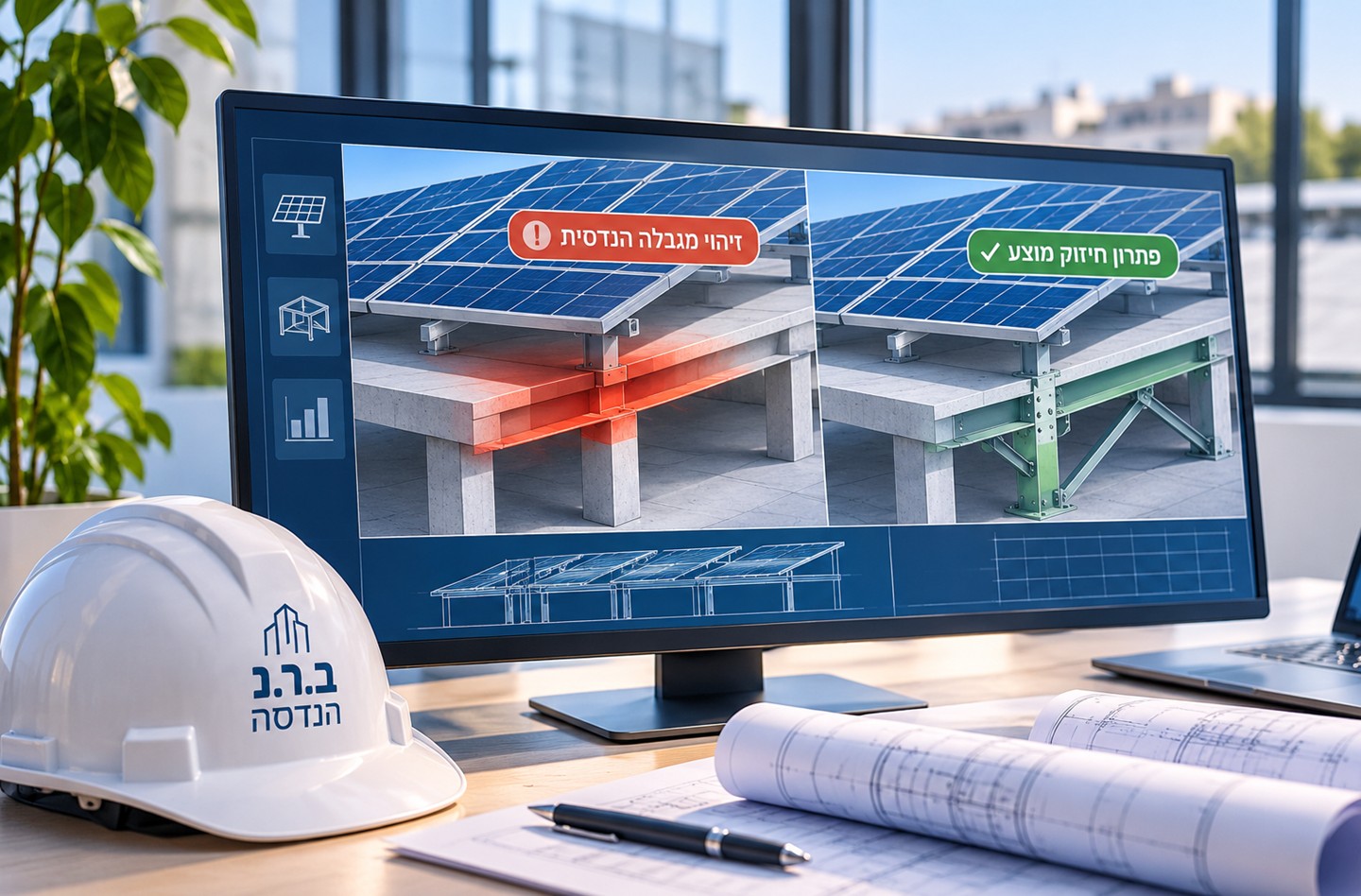
An engineering assessment does not always end with immediate approval of the proposed design, and at times the structural engineer identifies a limitation that requires an adjustment to the system, a change to the panel layout or the examination of a different engineering solution.
For example, it may be that in a certain area of the roof the planned load cannot be added without a further check or adjustment. In other cases, it may be necessary to change the position of the anchor points or to examine reinforcing existing components.
This does not necessarily mean that the structure is unsuitable for a solar system.
It is precisely here that the structural engineer’s experience comes into play: the ability to identify the limitation, understand its significance and examine possible engineering solutions, according to the condition of the structure and the requirements of the project.
A professional structural engineer is measured not only by the ability to approve a design, but also by the ability to recognise when a change is required in order to reach a safe and suitable solution.
Planning solar systems requires a combination of knowledge in structural engineering and an understanding of the characteristics of installations mounted on roofs.
A structural engineer experienced in the field is familiar with the challenges related to wind loads, anchoring solutions, existing buildings and the integration of new systems onto roofs of various types.
Experience is particularly important when dealing with industrial buildings, lightweight roofs, older buildings or projects in which engineering limitations exist.
When choosing a structural engineer, it is worth checking their experience in similar projects, their training and the scope of the checks they carry out according to the needs of the project.
It is also important to ensure that there is professional coordination between the structural engineer, the system designers and those responsible for the installation, so that the chosen solution suits both the solar system and the structure that carries it.
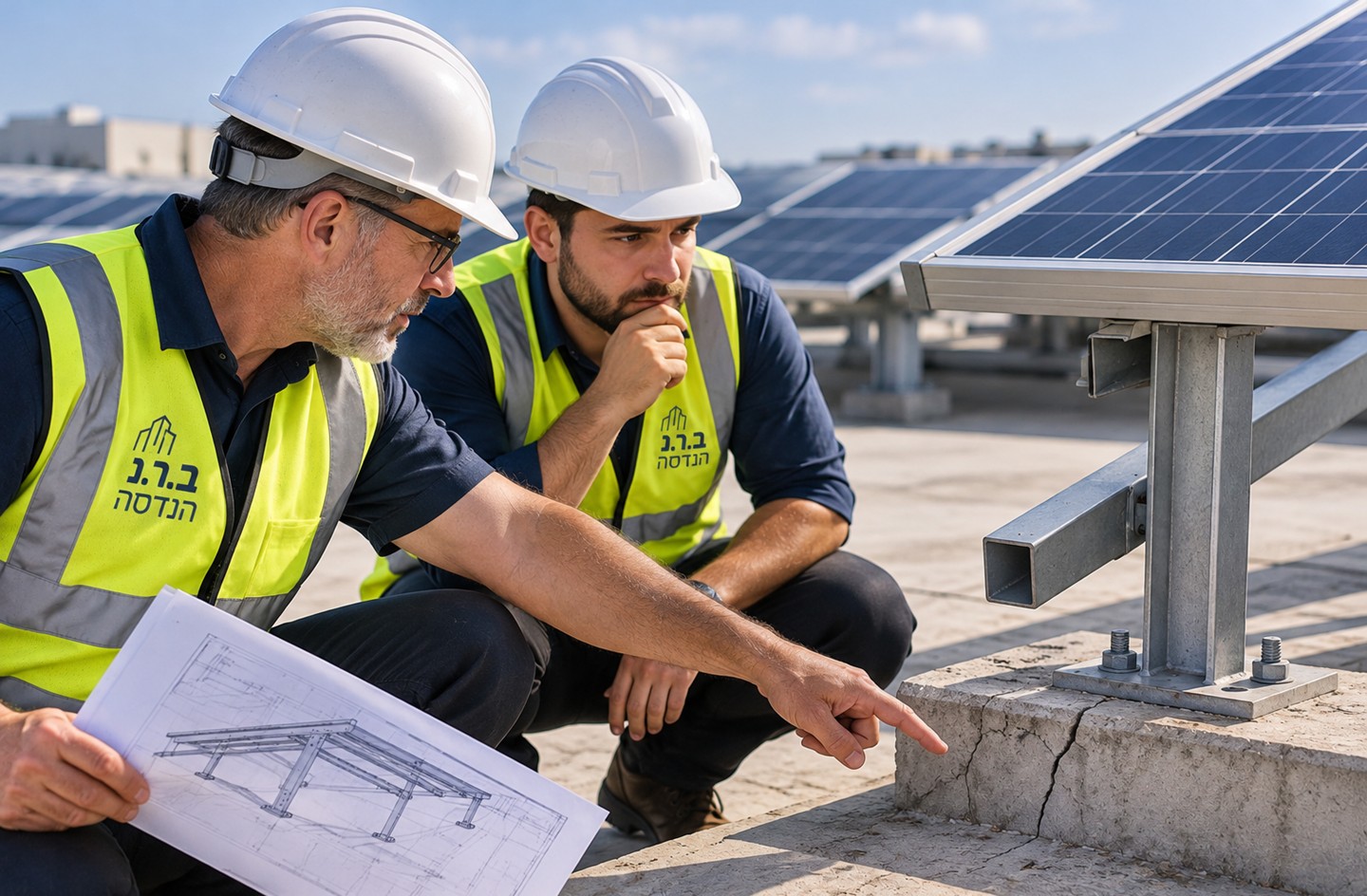
A solar installation begins with the design of the panels, but its engineering safety also depends on the structure it is mounted on.
A professional examination of the roof, an understanding of the loads, a check of the connections and the identification of existing limitations are all part of the considerations that must be taken into account before an engineering approval is given.
B.R.N Engineering provides structural engineering services and structural solutions for a range of projects, with reference to the characteristics of the structure and the relevant engineering requirements.
When planning a solar system on an existing roof, it is important to choose professionals who understand that not everything affecting the safety of the installation is visible to the eye.
Because a high-quality solar system does not begin only with the right panels, but also with the right choice of the structural engineer who examines the structure they will be installed on.
B.R.N Engineering (B.R.N Engineering Ltd.) supports developers, contractors, solar installers and building owners in the structural design and engineering assessment of roofs ahead of solar system installations across Israel. The company specialises in structural engineering, load suitability and stability checks, anchor-point design and engineering supervision throughout the planning and execution stages.
With accumulated experience across many projects and the ability to provide nationwide service, B.R.N Engineering gives its clients professional support that helps identify engineering limitations in advance, match the structure to the required loads and ensure that the installation is carried out safely and correctly.
You may also be interested in: Structural Engineer Approval for Lifeline Anchors | When Do You Really Need a Structural Engineer | Structural Engineer Authority and Responsibilities
The need for an engineering assessment and structural engineer approval depends on the type of building, the size of the system and the characteristics of the roof. For existing buildings, older roofs or large systems, an early engineering assessment may be especially important.
The structural engineer examines the roof’s load-bearing capacity, the existing and new loads, the effect of wind forces, how well the anchor points suit the building components and how well the actual situation matches the available engineering documentation.
A sound appearance does not necessarily indicate the ability to carry additional loads. Even a roof that performs well today may require an engineering assessment to confirm that it suits the loads of the planned system.
Identifying a limitation does not necessarily mean the structure is unsuitable. In most cases it is possible to examine solutions such as changing the panel layout, adjusting the position of the anchor points or reinforcing existing components, according to the condition of the structure and the project requirements.
Planning solar systems requires a combination of structural engineering and an understanding of installations mounted on roofs. Familiarity with wind loads, anchoring solutions and different roof types helps reach a safe and suitable solution.