
When discussing the construction industry, most people are familiar with architects, contractors, and site managers, but fewer are aware of the critical role played by a structural engineer. In practice, a structural engineer is one of the most important professionals involved in any construction project, as they are responsible for the stability, safety, and long-term structural integrity of a building.
Structural engineers are involved in a wide variety of projects, ranging from private homes and building extensions to residential towers, industrial facilities, agricultural structures, bridges, steel structures, and solar energy systems. Their role extends far beyond preparing engineering drawings; it involves significant professional responsibility throughout the entire project lifecycle, from initial planning to project completion.
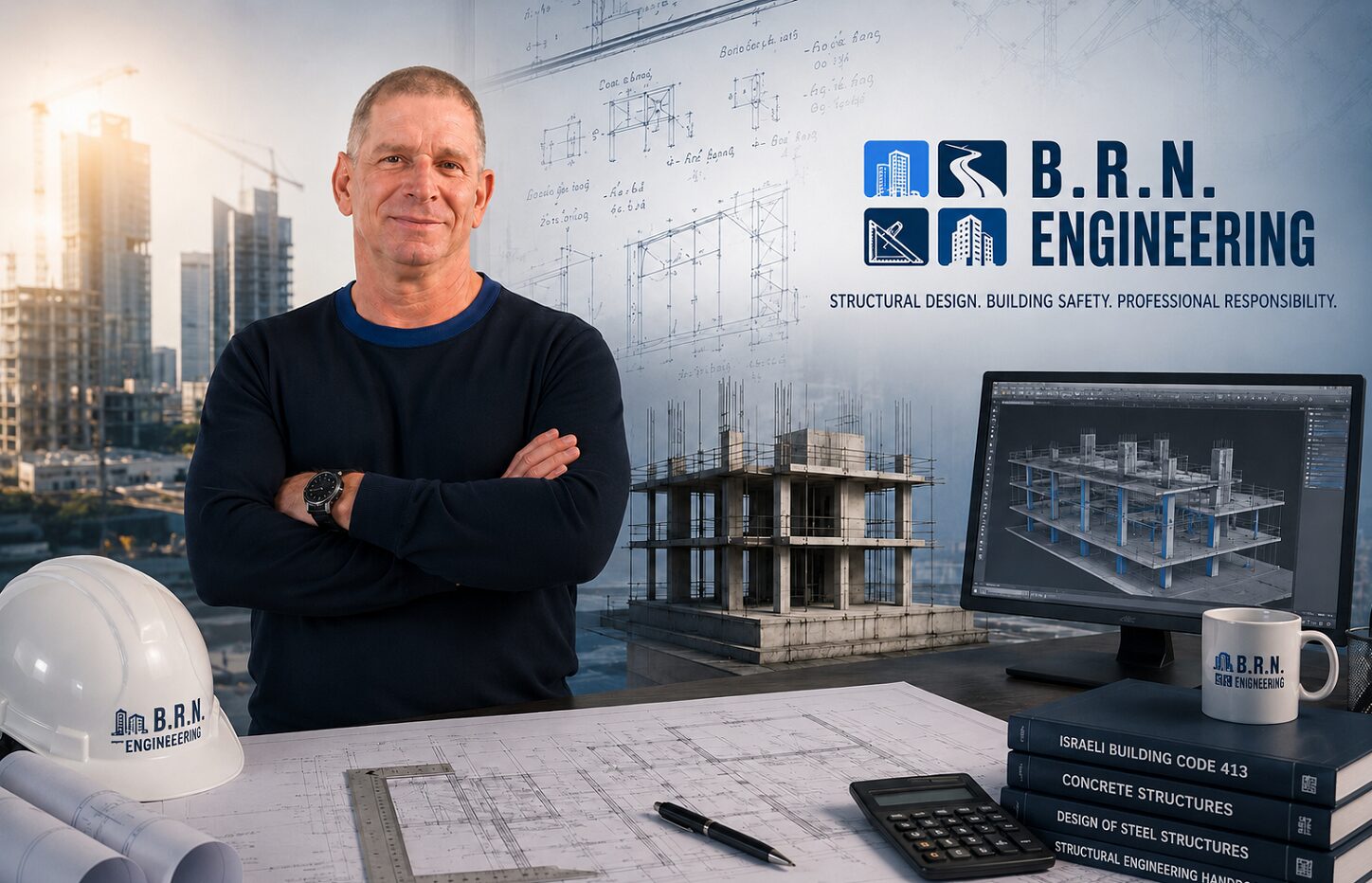
A structural engineer is a civil engineer who specializes in the design and analysis of building structures. Their work involves performing complex engineering calculations to ensure that a structure can safely withstand all anticipated loads throughout its lifespan.
While an architect focuses on the building’s appearance, functionality, and spatial design, the structural engineer ensures that the architectural vision can be translated into a safe and stable structure. They design foundations, columns, beams, slabs, and other load-bearing elements while ensuring compliance with Israeli building codes, regulations, and engineering standards.
Without proper structural design, even the most visually impressive building may be unsafe and unsuitable for use.
A common question is whether any civil engineer can perform the work of a structural engineer. The answer is more nuanced than many people realize.
Civil engineering encompasses a broad range of disciplines, including transportation engineering, infrastructure planning, drainage systems, project management, and construction supervision. Structural engineering, on the other hand, focuses specifically on structural stability and load-bearing design.
In practice, structural engineers possess specialized knowledge and experience in areas such as reinforced concrete, steel structures, wind loads, seismic design, static and dynamic analysis, and structural behavior. Therefore, whenever structural design, structural calculations, or stability certifications are required, an engineer specializing in structural engineering is essential.
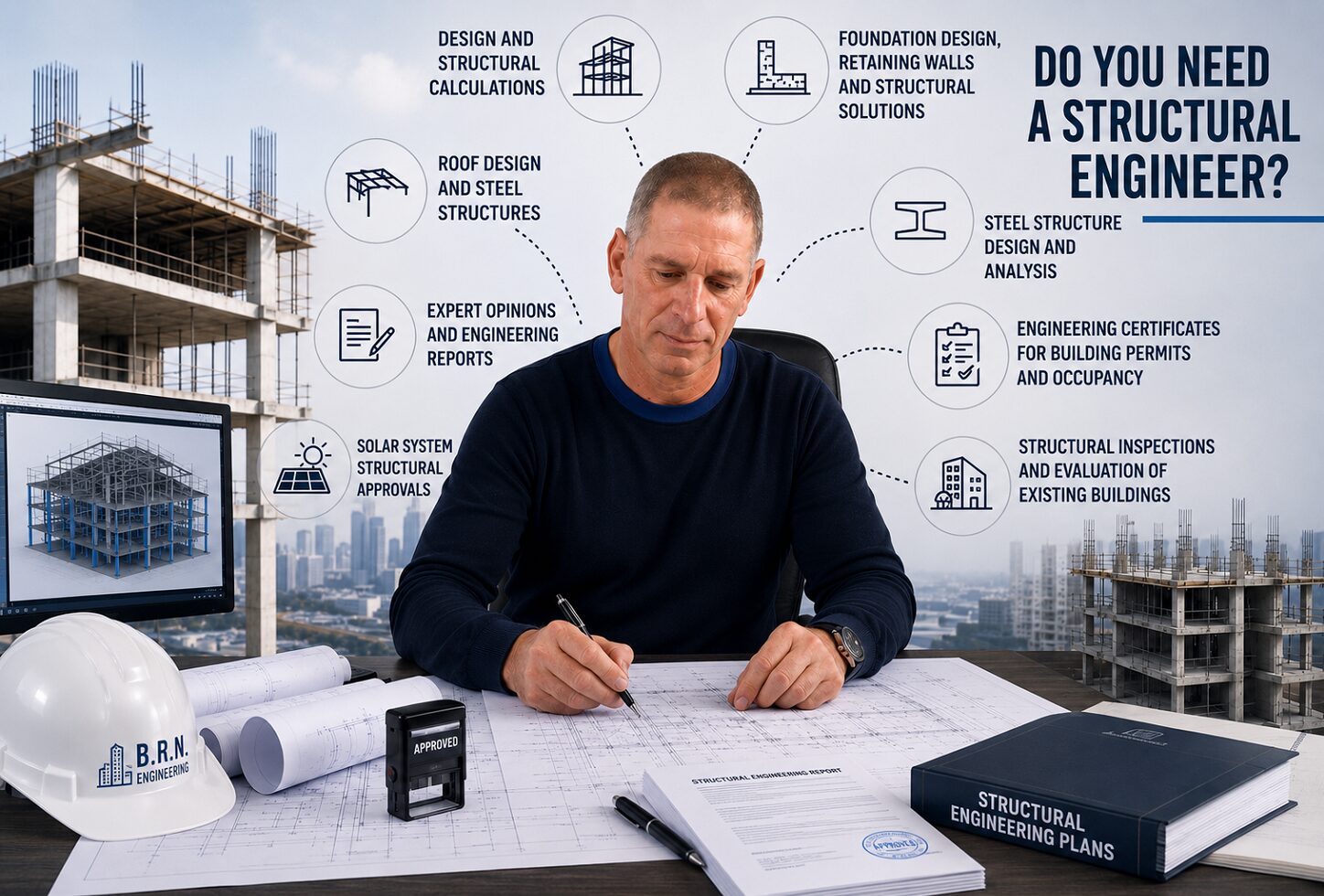
The authority of a structural engineer is derived from their professional qualifications and from the requirements established by Israeli planning and building regulations, as well as applicable engineering standards.
As part of their professional responsibilities, structural engineers are authorized to prepare, review, and sign a wide range of engineering documents and structural plans.
Their duties typically include preparing structural drawings, performing stability calculations, designing steel structures, foundations, retaining walls, specialized roofing systems, and complex structural projects. In addition, they provide engineering approvals required for building permits, occupancy approvals, and, in many cases, modifications to existing buildings.
In recent years, demand for structural engineering approvals has increased significantly in connection with rooftop solar installations. Structural engineers must evaluate whether an existing structure can safely support the additional load imposed by a solar system over time and under varying weather conditions.
One of the most important aspects of a structural engineer’s role is their professional signing authority. Municipal authorities, planning committees, and government agencies frequently require the signature of a qualified structural engineer as a condition for approving plans and permits.
This signature is far more than a procedural formality. When a structural engineer signs an engineering plan or approval document, they are confirming that they have reviewed the relevant information, performed the necessary calculations, and determined that the structure complies with applicable safety requirements and engineering standards.
For this reason, a structural engineer’s signature carries significant professional and legal weight and is often one of the most important documents within a construction project’s approval process.

In many cases, a structural engineer’s professional opinion serves as expert evidence in legal proceedings. Courts in Israel routinely rely on engineering experts when resolving disputes involving construction defects, structural cracks, design failures, property damage, building collapses, or disagreements between developers, contractors, and property owners.
When a structural engineer submits an expert opinion, the court evaluates it based on the engineer’s qualifications, professional experience, and the methodology used to reach their conclusions. In many cases, the structural engineer may also be called upon to testify in court and present their findings before a judge.
As a result, a well-founded engineering opinion prepared by a qualified structural engineer can play a decisive role in resolving construction-related disputes.
Structural engineering is considered one of the most responsibility-intensive disciplines within the construction industry. Any design error may have serious implications for building safety and the wellbeing of its occupants.
Structural engineers are responsible for ensuring that structures are designed in accordance with Israeli standards, site conditions, soil characteristics, intended use, and anticipated loads throughout the building’s service life. They must perform accurate calculations, select appropriate construction methods, and develop engineering solutions that ensure long-term stability and durability.
In many projects, structural engineers continue to be involved during the construction phase through supervisory services, ensuring that work on site is carried out in accordance with approved plans and engineering specifications.
In practice, nearly every project involving a structural component requires the involvement of a structural engineer.
This is particularly true for private homes, building extensions, additional floors, safe rooms (Mamad), industrial buildings, warehouses, retaining walls, steel structures, agricultural facilities, large pergolas, and solar energy installations.
Even modifications within existing buildings, such as removing walls, creating new openings, or changing certain building uses, may require a structural engineer’s approval to ensure that the proposed changes do not compromise structural stability.
The quality of structural design affects not only building safety but also the overall cost and efficiency of a project. Well-executed structural planning can reduce material consumption, minimize construction errors, and help prevent costly issues in the future.
An experienced structural engineer can identify potential engineering challenges during the early planning stages and provide solutions that are safe, practical, and cost-effective. In addition, experienced professionals are familiar with local authority requirements, current building standards, and modern construction methods, helping projects progress more smoothly and efficiently.
A structural engineer is the professional responsible for ensuring the safety, stability, and long-term performance of a building. Their authority includes structural design, engineering calculations, signing plans and approvals, preparing expert opinions, and supporting projects before regulatory authorities and legal bodies. Their signature carries substantial professional and legal significance, and their responsibility extends well beyond the design phase.
Looking for an Experienced Structural Engineer?
Whether you are planning a new construction project, a building extension, a steel structure, a solar installation, or require a professional engineering opinion, the team at B.R.N. Engineering is here to assist.
Contact us today or call +972-3-563-0000
We would be pleased to assist you with your project.