
The lifeline on the roof was installed two months ago. The installer left a signed certificate, it is filed in the safety folder, and everything looks closed.
Then an inspection arrives, and it turns out the certificate describes the equipment that was installed - but nobody checked whether the roof itself can carry the fall of a worker. Structural engineer approval for lifeline anchors exists to close exactly that gap: it is not a document the installer issues to himself, it is an engineering inspection of the structure the line is anchored to.
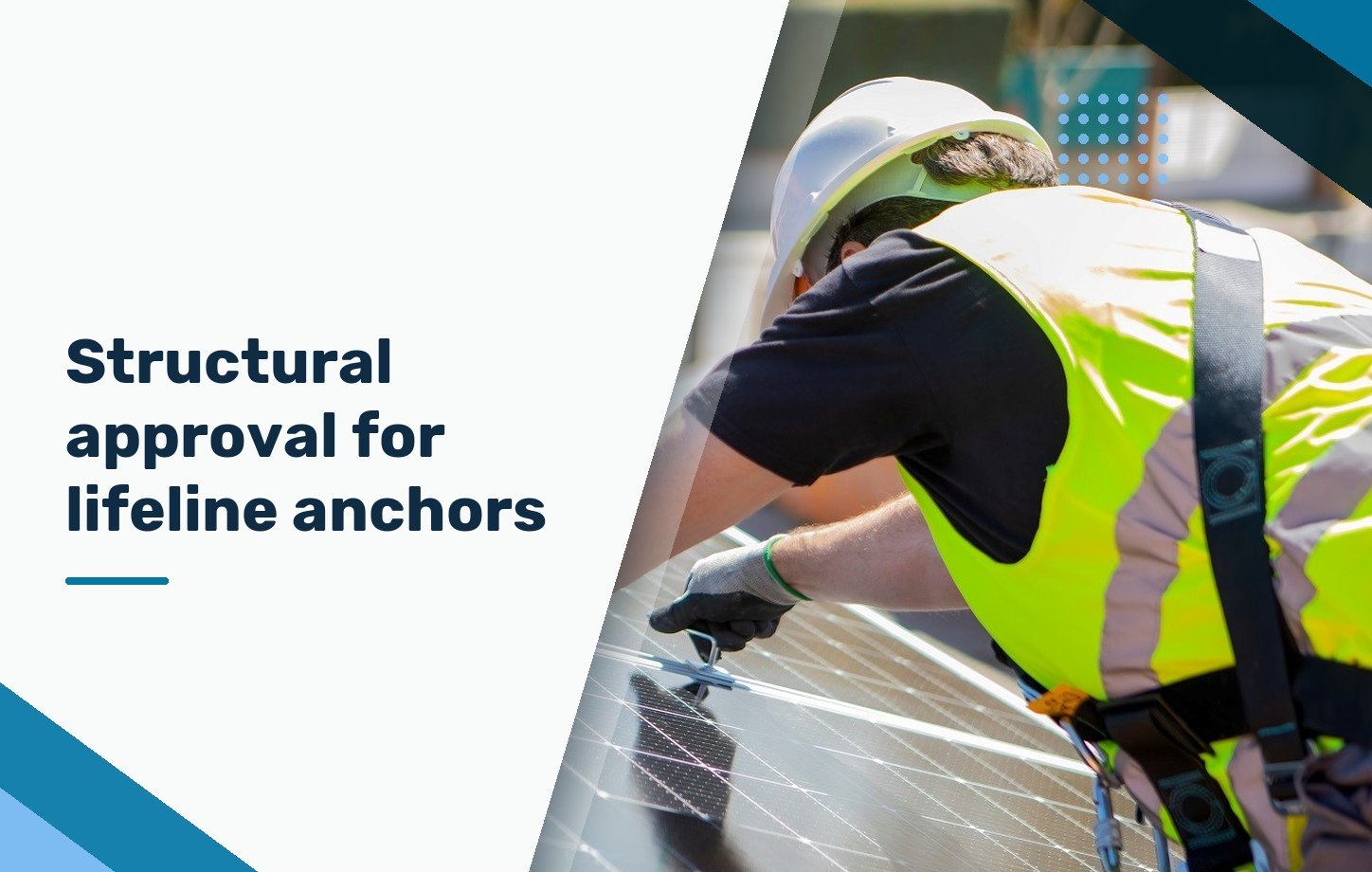
An anchor line - the term the regulations use for a “lifeline” - is a device made of rigid profile, steel cable or rope, that workers at height clip onto in order to move along a route that is not guarded. Work at height, under those same regulations, is any work in which a worker could fall more than 2 metres.
And here is the point that matters: the anchor line transfers the fall load into the structure. A concrete roof, a steel beam or a wall - somebody has to determine that this element carries the forces. That is a structural question, not an equipment question, and so it ends up with a structural engineer, a civil engineer who specialises in the frame of the building.
Regulation 11 of the Work at Height Safety Regulations, 2007 states that permanent anchor lines shall be installed with the approval and under the supervision of one of three professionals: a certified inspector, a mechanical engineer, or a registered and licensed civil engineer.
Two things in that regulation are worth noticing.
The first is the word “supervision” - the approval is not a signature that arrives after the work is finished, it is accompaniment of the installation itself, according to the applicable standard and the manufacturer’s instructions.
The second is who carries the responsibility: the occupier of the premises, meaning whoever holds the building - not the installer and not the equipment supplier. The regulations add that the responsibility does not stop on the day of installation: the occupier has to keep the anchor lines in sound condition over time. Where the question is which engineer signs which document, our page on the responsible engineer for inspection sets out the roles.
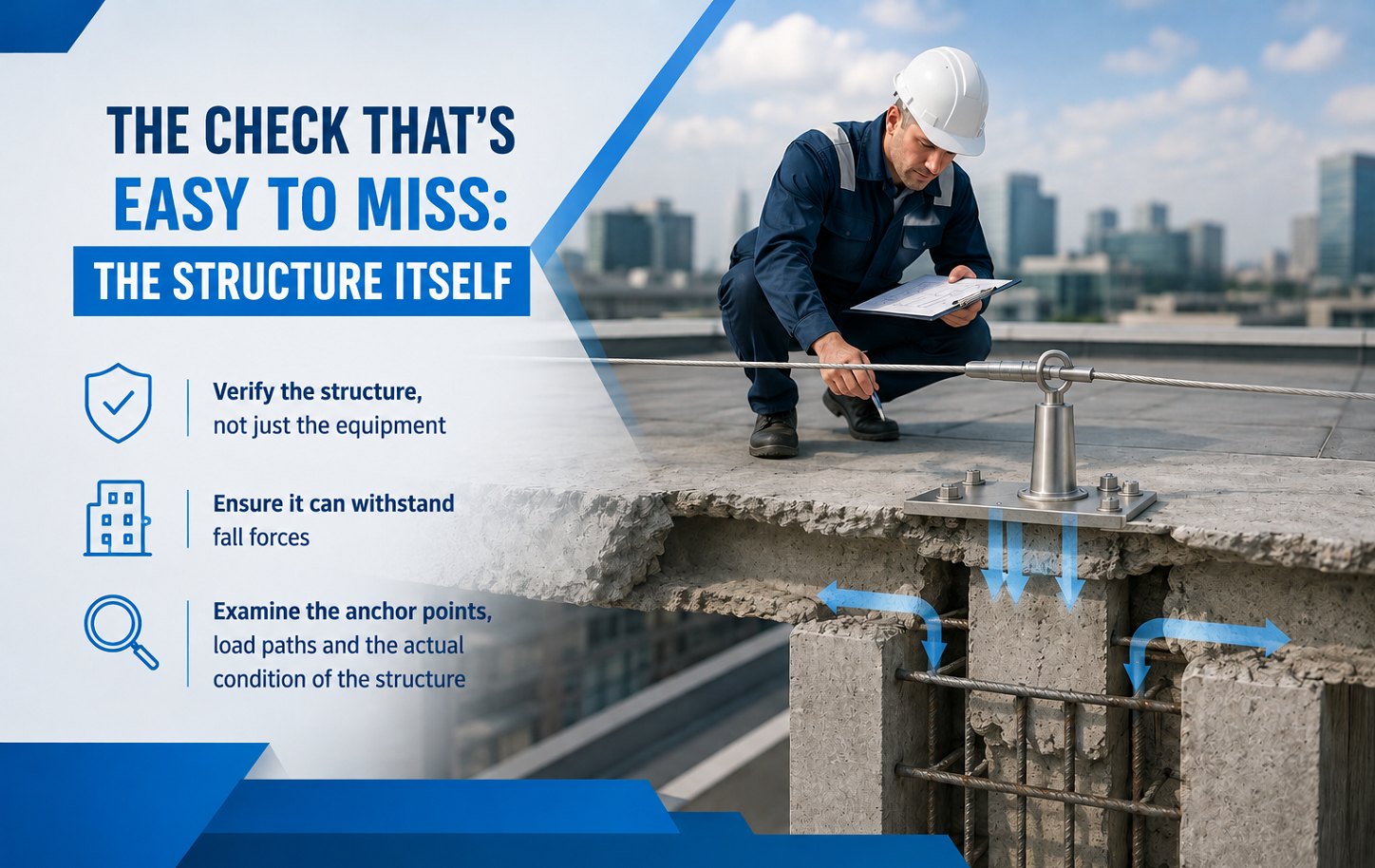
Separately from the installation approval, the regulations explicitly require that the structure the worker is anchored to be examined for its stability and for its ability to carry the load of a worker’s fall.
That is precisely the point at which an installer’s certificate, however professional, is not enough. A lifeline installed to every letter of the manufacturer’s instructions, but anchored to an element nobody examined, leaves the substantive question open.
That is why a structural stability inspection is work separate from inspecting the equipment. It examines the element the anchor connects to, the way the forces travel into the frame, and the actual condition of the structure - which in older buildings is sometimes a long way from what the original drawings show.
The frequency is set first of all by the manufacturer’s instructions for the system installed at your site. Only where the manufacturer has set none does the default in the regulations apply: once every 5 years, by one of the three professionals the regulation lists.
One more requirement worth knowing: a copy of the inspection is kept by the occupier of the premises, and has to be available for review by anyone who works using the lines, before they start work. The first step in any enquiry is therefore a simple one: pull out the manufacturer’s file and see what it says.

When an enquiry about an anchor line reaches us, the work starts with the structure and not with the equipment:
What is not done: determining remotely that an installation is sound or unsound. A determination like that requires an inspection on site and a signature, and that is exactly what the approval is. Further background on standards and safety in structural engineering is available on our site.
A certified inspector, a mechanical engineer or a registered and licensed civil engineer, with the installation carried out under their approval and supervision. Where the question is the ability of the structure to carry a fall load, that is a structural engineer’s work.
It depends what it says and who signed it. The regulations require both an installation approval by one of the three professionals and an examination of the structure the worker is anchored to. A certificate that does not answer both leaves a gap open.
At the frequency set in the manufacturer’s instructions, and in the absence of such a determination, once every 5 years. A copy of the inspection is kept by the occupier of the premises and is open for review by workers before they begin.

If there is a lifeline on your roof and the only document in the file is the installation certificate, this is the moment to complete the missing link. One inspection by a structural engineer closes both the regulatory requirement and the question that actually matters: what happens at the moment of a fall.