
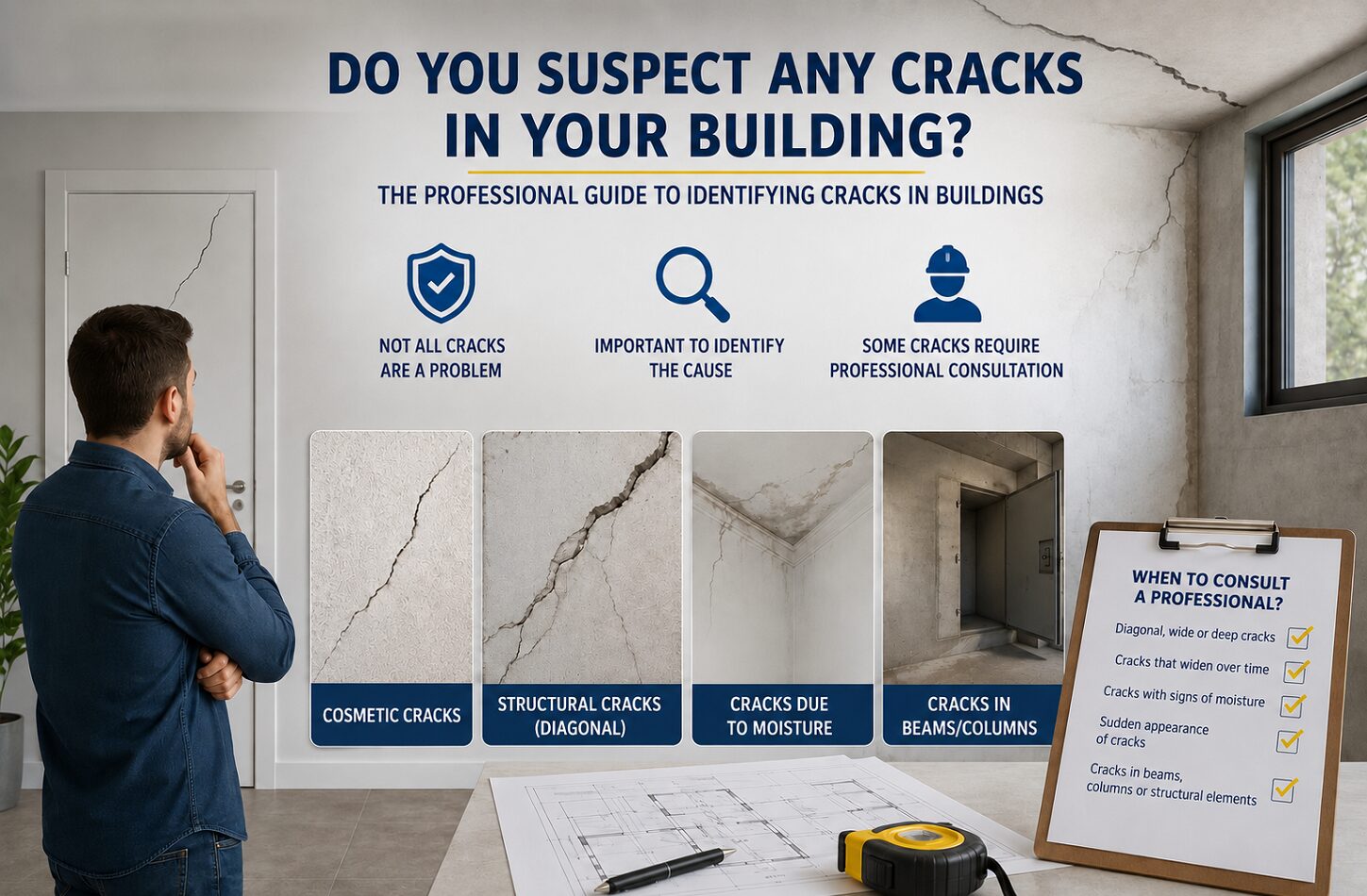
Few things unsettle homeowners quite like discovering a new crack in a wall. Sometimes it is a thin line that suddenly appears above a door, sometimes a diagonal crack in the corner of a window, and in other cases cracks in the ceiling or in the safe room (Mamad). The first question that almost always comes up is: is this a purely cosmetic issue, or a sign of a structural problem that could affect the stability of the building?
The truth is that not every crack indicates danger, but not every crack can be ignored either. That is why it is important to understand what causes cracks to form, what types of cracks exist, and when it is worth turning to a structural engineer for a professional inspection.
Buildings are not entirely static objects. Over the years they are affected by ground movement, temperature changes, loads, moisture, renovation work, and even the natural aging of building materials.
In many cases, cracks are the result of natural processes that do not endanger the structure. On the other hand, there are situations in which a crack is the first sign of a deeper problem that requires a professional inspection.
Among the common causes of cracks:
In most cases, the answer is no.
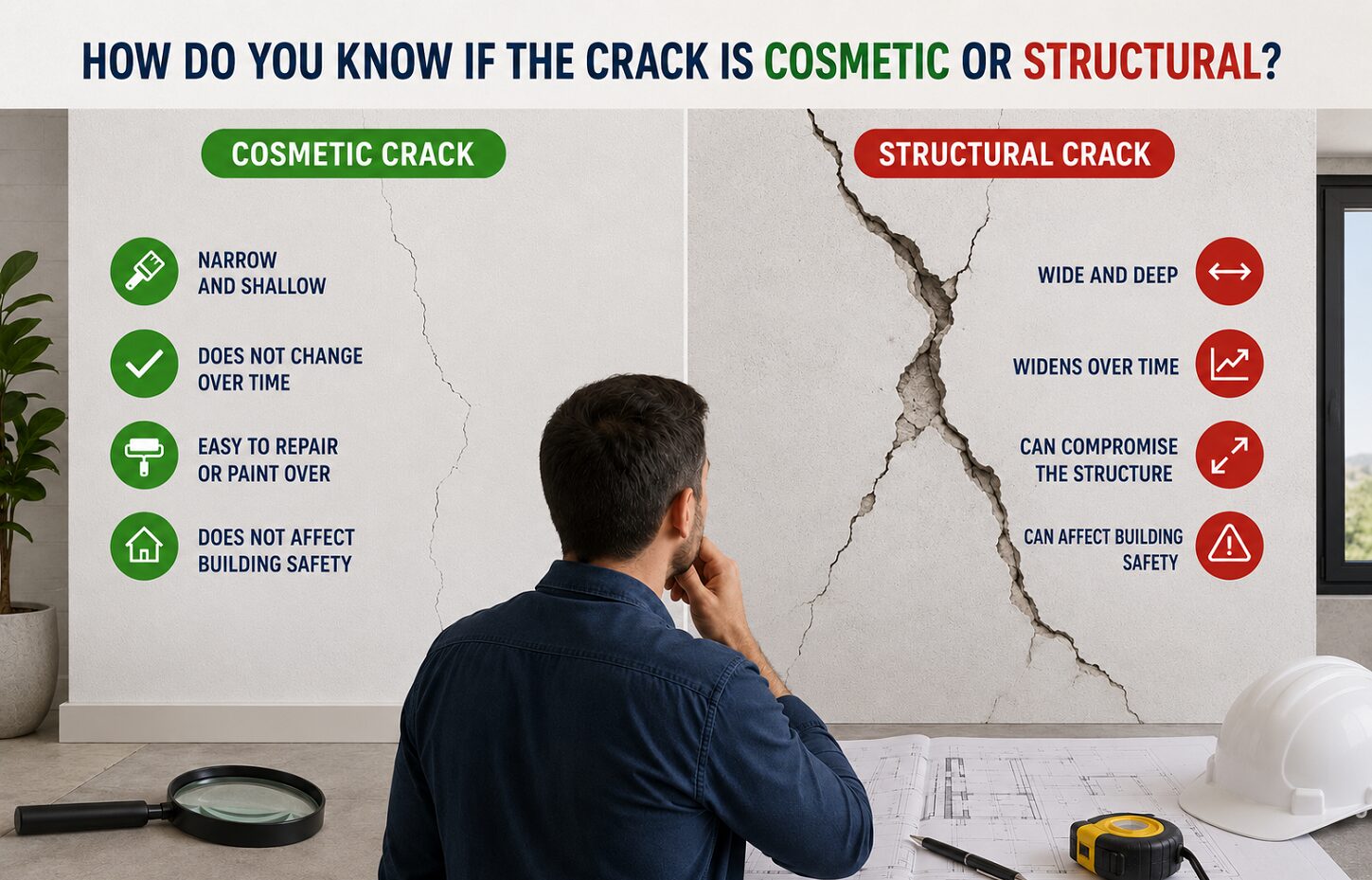
Many cracks are purely cosmetic and do not indicate any harm to the building’s stability. That said, certain cracks may point to movement in the structure, foundation settlement, or another structural problem.
Therefore, it is not correct to determine whether a danger exists based solely on the presence of a crack. You need to examine its location, width, direction, and depth, and whether it continues to develop over time.
These are relatively superficial cracks that usually appear only in the plaster or paint layer.
Common characteristics:
In most cases, this is a purely cosmetic issue.
These cracks may indicate movement in the structure or an engineering problem that requires inspection.
Possible signs:
In such cases, it is advisable to call a structural engineer for a professional inspection.
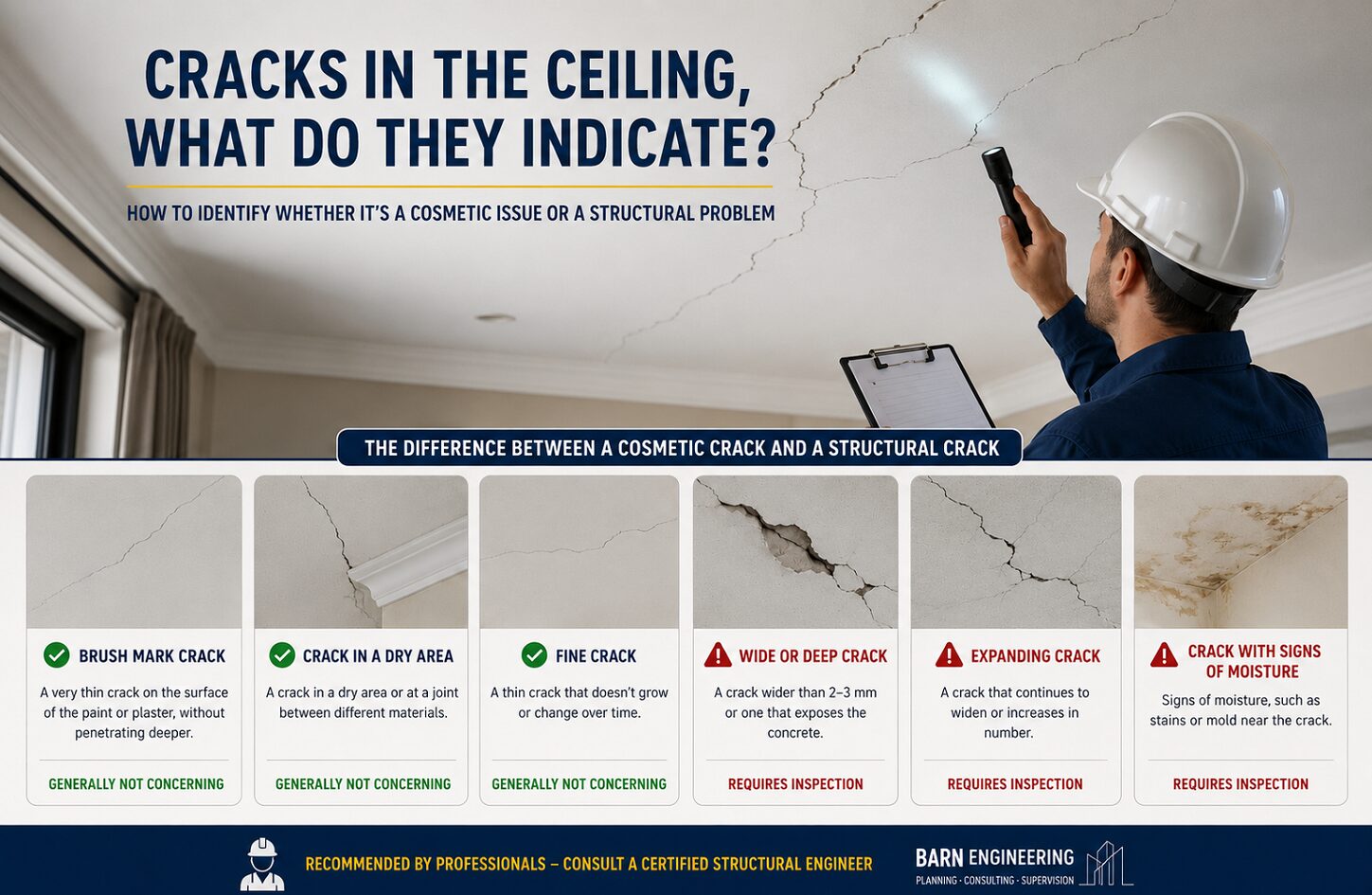
Cracks in the ceiling cause particular concern because they are perceived as part of the building’s structural skeleton.
Not every ceiling crack indicates danger. Sometimes it is only a crack in the plaster. However, when the following appear:
it is worth carrying out a professional inspection in order to rule out a structural problem.
The safe room (Mamad) is one of the most important elements of a building in terms of safety.
Because of its unique concrete construction and the strict requirements of the Home Front Command, the appearance of cracks in the safe room requires special attention.
This does not mean that every crack in the safe room is dangerous, but it is certainly advisable to check:
A professional inspection can provide a clear answer and ensure that the safe room continues to meet the safety requirements.
One of the most common complaints is the appearance of cracks several months after a renovation.
In most cases this is not an engineering failure but a relatively natural process resulting from the drying of building materials, slight movements between different materials, plastering work, the installation of new partitions, or local changes in loads.
However, when the renovation involved changes to load-bearing walls, the opening of new openings, or the removal of structural elements, it is important to make sure the work was carried out in accordance with appropriate engineering design.
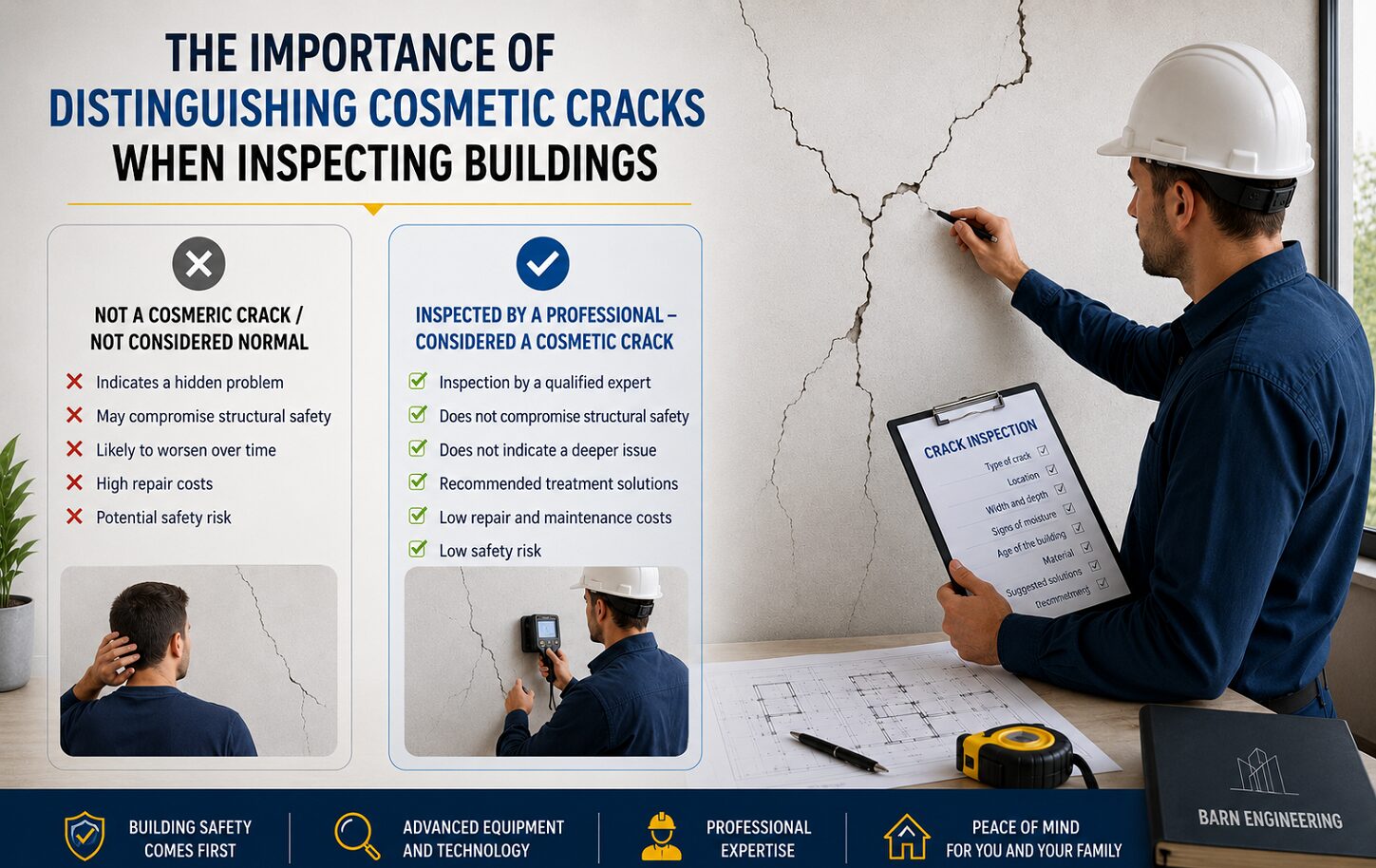
One of the common mistakes is trying to assess the severity of a crack on your own, or relying on an opinion that is not an engineering one.
In practice, two cracks that look almost identical to the eye can stem from completely different causes, ranging from a cosmetic flaw in the plaster to a structural problem that requires professional treatment.
A certified structural engineer examines all of the data: the crack’s location, direction, width, and depth, the age of the building, the construction method, the type of soil, the renovation history, and whether there are additional signs indicating movement or settlement. Only after a professional inspection of the building’s stability can it be determined whether this is merely a cosmetic defect or a structural problem that must be addressed.
BRN Engineering, led by structural engineer Michael Langer, provides design, consulting, and engineering inspection services for private homes, residential buildings, public buildings, and commercial structures.
Over the years, our firm has accompanied a wide range of projects and carried out engineering inspections of buildings in which cracks, signs of settlement, stability problems, and various construction defects appeared. This accumulated experience makes it possible to quickly identify whether a phenomenon is natural and of no engineering significance, or a problem that requires professional treatment.
When there is uncertainty regarding the source of a crack, it is advisable to carry out a professional inspection as early as possible. In many cases an engineering inspection provides peace of mind to the property owner, and in other cases it makes it possible to detect a problem at an early stage and prevent significant damage and costs in the future.
Not necessarily. Many cracks are purely cosmetic and do not affect the building’s stability. That said, when a crack widens, appears diagonally, or is accompanied by additional signs such as settlement or distortion, it is advisable to seek a professional inspection.
There are several signs that may indicate a structural problem requiring an engineering inspection:
When one or more of these signs appear, it is advisable to hire a certified structural engineer for a professional inspection.
Not always, but since the safe room is an important safety component of the building, any significant crack in it requires professional attention and an examination of its source.
Yes. After a renovation, cracks may appear as a result of building materials drying out, natural movements, or the meeting of different materials. In most cases this is a natural phenomenon, but when structural changes have been made you must make sure the work was carried out in accordance with engineering design.
A structural engineer examines the crack’s location, width, depth, and direction, its rate of development, the age of the building, the condition of the soil, and additional data. Combining all of the findings makes it possible to determine whether this is a cosmetic crack or a structural defect that requires treatment.